
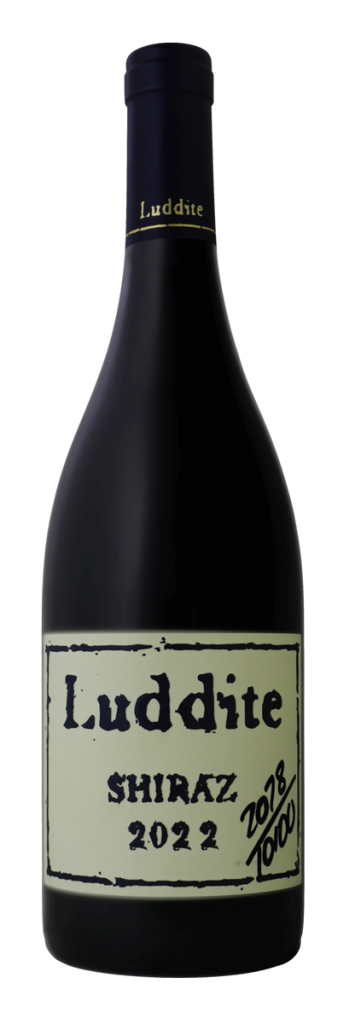
Luddite Shiraz
Some people describe Luddite Shiraz as Niels Verburg contained in a glass; Niels is six foot four and his smile is the embodiment of a warm embrace.
As a young winemaker traveling the world, Niels confirmed his love for Shiraz when working a harvest in Australia, but it was a winery in Chile that inspired his wine-making method. “It was as if I’d gone back 20 years; it was ramshackle and chaotic, but they had great fruit and passion and I’d never seen that quality of wine”, he explains.
“The nitty gritty of good winemaking is to have good grapes, good yeast and good barrels,” says Niels. “Being hi-tech and cutting edge isn’t important to me. When you go into a winery and see the centrifuges and reverse osmosis, it’s like going into the kitchen of a top restaurant and seeing a microwave, you think “Hey, that’s not right!”’
Luddite Shiraz 2000 was the Luddite’s first vintage. “There’s been an improvement every year,” says Niels. “The ultimate goal would be a perfect wine, but of course that doesn’t exist.”
Vintages
Luddite Shiraz 2022
Another year of good rain which continued our crop growth and improved our vigour in the vineyards. We always pick on flavour and for some reason these flavours didn’t all come at once, so we picked over 5 days. The fruit was in excellent condition with very little bird damage. Fermentation took place in stainless steel tanks with regular pump overs. We paid serious attention to keeping the ferments cooler to retain as much fruit expression and give more time on the skins to build up structure. We pressed and allowed the wine to finish malolactic fermentation in tank before racking to barrel. After 2 years in barrel, we made up the final blend using a small amount of Mourvèdre, Cabernet Sauvignon and Grenache Noir from our own vineyards to fill out the mid-palate and add freshness. 100% French Oak of which 10% was new.
Grapes were sourced from Luddite vineyard sites:
Old Block harvested on the 2nd & 5th March 2022 Young Block harvested on the 5th & 6th March 2022
Analysis of fruit at harvest:
23.7° Balling, TA – 6.6 g/l, pH – 3.3
Tasting Notes as at 7th March 2025:
- This wine is a pure reflection of the year’s growing season.*
Appearance: Deep broody garnet. Nose: Instantly recognisable as Luddite Shiraz: garrigue, wildflowers, fynbos, mixed herbs and spicy dark plum. Palate: Juicy bold entry. Mulberry, dark cherry on mid-palate with warm decadent fruit balanced by good tannins. Long aftertaste of olive tapenade with a hint of saltiness.
Analysis of the wine:
Alcohol: 14.19% pH: 3.35 TA: 6.0 g/l RS: 1.9 g/l
10 100 bottles of this vintage were produced with 502 magnums.
Luddite Shiraz 2021
Finally, a year of good rains preceding harvest. This resulted in better crops and a little more vigour in our vineyards. As a result of these weather conditions, the grapes were riper at a lower sugar level even though they were picked a week later than 2020. We picked the two blocks a week apart and both batches were fermented separately in stainless steel tanks and a small portion was fermented in open fermenters. We fermented slightly cooler to retain more fruit expression and give more time on the skins to build up structure. We pressed and allowed the wine to finish malolactic fermentation in tank before racking to barrel. After 2 years in barrel, we made up the final blend using a small amount of Mourvèdre and Cabernet Sauvignon from our own vineyards to fill out the mid-palate. 100% French Oak of which 15% was new.
Grapes were sourced from Luddite vineyard sites:
Young Block harvested on the 14th February 2021
Old Block harvested on the 20th February 2021
Analysis of fruit at harvest:
23.0° Balling, TA – 6.8 g/l, pH – 3.4
Tasting Notes as at 31st October 2023:
_ This wine is a pure reflection of the year’s growing season. _
Appearance: Crimson in colour which carries to edge of glass.
Nose: Hints of African Violets, roses and Turkish delight with subtle hints of raspberries and red cherries.
Palate:Juicy fruit and spice on entry. Cranbury, red current fruit dominates mid-palate balanced by firm tannins & telltale Luddite cloves and liquorice. Long finish with a touch of terroir driven saltiness with a fresh aftertaste.
Analysis of the wine:
Alcohol: 13.62% pH: 3.46 TA: 6.0 g/l RS: 2.1 g/l
9 480 bottles of this vintage were produced with 515 magnums.
Luddite Shiraz 2020
Even though the drought was broken, and we had better rainfall leading up to the harvest, the knock-on effect of the previous five years drought still affected us as the vines struggled to recover. Unfortunately, our crop was low again and both blocks were picked together and fitted into one tank for fermentation.
Due to the high skin to juice ratio, we got incredible colour within a few days of fermentation. We allowed the malolactic fermentation to finish while on skins which gave us extra post-fermentation maceration and a chance for the wine to pick up really fine tannins. We pressed and allowed the wine to finish malolactic fermentation in the tank before racking to barrel. After 2 years in barrel, we made up the final blend using a small amount of Mourvèdre and Cabernet Sauvignon from our own vineyards to fill out the mid-palate. 100% French Oak of which 11% was new.
Grapes were sourced from Luddite vineyard sites:
Young Block harvested on the 11th February 2020
Old Block harvested on the 11th February 2020
Analysis of fruit at harvest:
24.0° Balling, TA – 6.8 g/l, pH – 3.42
Tasting Notes as at 1st March 2023:
Appearance: Dark red in colour with purple hues which carries through to edge of glass.
Nose: All spice, Turkish delight and dark fruit.
Palate: Juicy fruit and spice on entry. Tell-tale Luddite dark fruit core in mid-palate. Plumpness balanced by fine tannins on finish. Aftertaste is long, dry and slightly salty.
Analysis of the wine:
Alcohol: 14.65% pH: 3.55 TA: 5.6 g/l RS: 2.4 g/l
6 000 bottles of this vintage were produced with 12 magnums.
Luddite Shiraz 2019
It was hard to believe, but the drought continued and the crop was even smaller than 2018. These hot, dry conditions resulted in smaller berries which in turn made the crop even smaller (1.6 tons per ha). It is a testament to our great soils that even with these hot conditions, the natural acidity remains high and balances the fruit intensity. Because of the small crop, we picked both blocks together and it was very sad to see them fit into one tank for fermentation.
Due to the high skin to juice ratio, we got incredible colour within a few days of fermentation. We allowed the malolactic fermentation to finish while on skins which gave us extra post-fermentation maceration and a chance for the wine to pick up really fine tannins. We pressed and went directly to barrel. 100% French Oak of which 15% was new. After 2 years in barrel, we made up the final blend using a small amount of Mourvèdre and Cabernet Sauvignon from our own vineyards to fill out the mid-palate.
Grapes were sourced from Luddite vineyard sites:
Young Block – picked on the 13th February 2019 Old Block – picked on the 13th February 2019
Analysis of fruit at harvest:
24.2° Balling, TA – 6.8 g/l, pH – 3.45
Tasting Notes as at 15th August 2022:
Appearance: Dark red in colour which carries through to the edge of the glass. Nose: Black cherries, welcoming spice and a touch of toastiness opening up to plummy dark fruit. Palate: Juicy fruit and spice on entry. A mouth-filling plumpness of dark fruit gives way to dry spices and tannin which balance the fruit beautifully. The finish is long, dry and savoury with underlying cinnamon stick sweetness.
Analysis of the wine:
Alcohol: 15.15% pH: 3.58 TA: 5.4 g/l RS: 2.5 g/l
5 800 bottles of this vintage were produced with 12 magnums.
Luddite Shiraz 2018
The 2018 vintage was a continuation of the ongoing drought that has been hitting the Western Cape since 2015. These hot, dry conditions resulted in smaller berries which in turn made the crop substantially smaller. We were surprised to see that even with these hot conditions, our natural acidity levels remained stable which balanced the fruit intensity. We picked the young and the old block 6 days apart and fermented them separately. They remained separate during fermentation and maturation, only coming together in the final blend one month before bottling. We continued to experiment with adding stalks to the fermentation, up to 40% in some of the open fermenters.
We felt that the tank portions were picking up tannin very easily and therefore we pressed earlier than normal, allowing the wine to settle and finish malolactic fermentation in tank before racking to barrel. Of the total barrel selection, 20% new Oak down to 6th fill with mostly French Oak being used. After 2 years in barrel, we made up the final barrel selection before bottling.
Grapes were sourced from Luddite vineyard sites:
Young Block – picked on the 15th February 2018 Old Block – picked on the 21st February 2018
Average analysis of fruit at harvest
23.6° Balling, TA – 6.6 g/l, pH – 3.44
Tasting Notes as at 14th July 2021
Appearance: Dark red in colour with bright red hues towards the edges. Nose: Dark brooding feel, cinnamon, touch of cigar box with violets and mace on the finish. Palate: Bold juicy fruit on entry with fresh tannin grip on mid-pallet. Hints of aniseed followed by dry spices to balance the fruit. The finish is long and dry and certainly needs a lot more time.
Analysis of the wine
Alcohol: 14.37% pH: 3.4 TA: 5.6 g/l RS: 2.1 g/l
6 680 bottles of this vintage were produced with 514 magnums and 60 double magnums.
Luddite Shiraz 2017
The 2017 vintage was characterised by very hot, dry conditions in the lead up to the harvest. However, January and February were relatively cool and this allowed the grapes to ripen slower than initially thought. Due to this coolness, the natural acidity remained high which lifted the overall quality of the fruit. We had a slightly bigger crop than the previous two vintages so we could pick both the old and young block separately. They remained separate during fermentation and maturation, only coming together in the final blend one month before bottling. We continued to experiment with adding stalks to the fermentation, up to 30% in some of the open fermenters.
The tank fermented portions spent a total of five weeks on skins before being pressed and allowed to settle in tank before being racked to barrel. Of the total barrel selection, 32% new Oak down to 4th fill with mostly French Oak being used. After 2 years in barrel, we made up the final barrel selection before bottling.
Grapes were sourced from Luddite vineyard sites:
Old Block – picked on the 10th February 2017
Young Block – picked on the 14th February 2017
Average analysis of fruit at harvest
24.8° Balling, TA – 6.8 g/l, pH – 3.42
Tasting Notes as at 24th August 2020
Appearance: Incredibly dark plummy in colour with purple tones towards the edges.
Nose: Floral, sweet fruit, cinnamon, touch of vanilla and a hint of fynbos.
Palate: Bold juicy fruit on entry with fresh tannin grip on mid-pallet followed by dark, spicy fruit. The finish is long and invitingly decadent.
Analysis of the wine
Alcohol: 14.86% pH: 3.55 TA: 5.59 g/l RS: 2.09 g/l
2 600 bottles of this vintage were produced with 515 magnums and 60 double magnums.
Luddite Shiraz 2016
The 2016 vintage was the second year of below average rain fall in Bot River. Due to the dryness and heat, the grapes ripened very quickly and we picked the second week in February with big juicy flavours. As in 2015, we picked both our old block and young block together. Half was fermented in a stainless steel tank and the other half in small, open bin fermenters. A combination of punch downs and pump-overs were used during the fermentation. We added about 10% stalks to the open bin fermenters to give us a little more freshness and complexity.
The tank spent a total of four weeks on skins and then pressed directly to barrel. The open fermenters were pressed immediately after fermentation and also racked directly to barrel. Of the total barrel selection 30% new Oak down to 6th fill with mostly French Oak being used. After 2 years in barrel, we made up the final barrel selection before bottling.
Grapes were sourced from Luddite vineyard sites:
Old & Young Block – picked on the 10th February 2016
Average analysis of fruit at harvest
25.5° Balling, TA – 6.7 g/l, pH – 3.4
Tasting Notes as at 17 October 2019
Appearance: Dark plummy in colour with bright edges.
Nose: Spice, juicy fruit, cinnamon, plummy and a hint of toastiness.
Palate: Bold juicy fruit on entry with a touch of cinnamon. Mid-pallet is broad, rich and dominated by dark fruit. This is all balanced with dry, firm tannins on the finish.
Analysis of the wine
Alcohol: 15.4% pH: 3.5 TA: 5.5 g/l RS: 2.6 g/l
11 800 bottles of this vintage were produced with 515 magnums.
Luddite Shiraz 2015
The 2015 vintage was the start of a long, dry spell in the Western Cape. Due to this dryness and heat towards the end of the growing season, the 2015 vintage is our smallest to date (2.3t/ha). As a result, we picked both our old block and young block together for the first time and, as depressing as it was to look at, the whole farm fitted into one tank. As opposed to having various methods of fermentation ie, small bin punch-downs and pump-overs, all the wine was made in stainless steel tank with the pump-over method. Being a smaller crop, we have unbelievable fruit intensity and by fermenting in stainless steel, we were able to control the temperature throughout the fermentation and therefore retain the fruit intensity of the vintage. Luckily the ferments went very dry with low residual sugars which balanced the low natural acidity of the vintage. Three pump-overs a day to make sure that we got enough tannin and structure to balance the fruit.
A total of four weeks on skins then pressed and directly to barrel. We upped the new wood component to 30% and the balance of older wood down to 6th fill. Of the total barrel selection, 8% Hungarian Oak and the rest was French Oak. After 2 years in barrel, we made up the final barrel selection before bottling.
Grapes were sourced from Luddite vineyard sites:
Old & Young Block – picked on the 17th February 2015
Average analysis of fruit at harvest
23.4° Balling, TA – 6.2 g/l, pH – 3.4
Tasting Notes as at 4 September 2018
Appearance: Dark cherry in colour.
Nose: Spice and scrubland with cloves and dark cherry fruit.
Palate: Fresh, dry, spicy entry with dark fruit, cinnamon sticks, bay leaves and liquorice on the mid-pallet with a refreshing, long, dry finish.
Analysis of the wine
Alcohol: 14.85% pH: 3.61 TA: 4.9 g/l RS: 2.0 g/l 5 900 bottles of this vintage were produced.
Luddite Shiraz 2014
The 2014 vintage followed on beautifully in the sense that it remained as cool as 2013. Most wine regions in South Africa experienced rot and mildew due to the late rains whereas Bot River remained dry and cool. This produced very elegant, beautifully balanced and perfumed wines. The longer ripening insured that the grapes were balanced with good, natural acidity.
On the success of our experiments with adding stalks to the ferments in 2013, we continued this trend with up to 10% fermentation with stalks. The desired effect is to maintain more freshness to the mid-pallet. Due to the fantastic quality of the grapes, the wine spent a total of 6 weeks on the skins and was allowed to go through malolactic fermentation during this period.
It was then pressed and the two blocks kept separately in barrel of which 20% was new French Oak and the balance older wood down to 8th fill. Of the total barrel selection, 5% was Hungarian Oak and the rest was French Oak. After 2 years in barrel, we made up the final blend between the two batches and bottled.
Grapes were sourced from Luddite vineyard sites: Young Block – picked on the 20th February 2014 Old Block – picked on the 24th February 2014
Average analysis of fruit at harvest 23.5° Balling, TA — 7.0 g/1, pH — 3.4
Tasting Notes as at 4 September 2018 Appearance: Dark purple vibrancy and fantastic dark colour to the edge of the glass. Nose: Perfumed, fynbos, floral, all spice with liquorice, cloves and reddish fruit. Palate: Gentle entry, spicy red fruit, with cloves and liquorice on a long balanced finish. Probably the most balanced wine we have made thus far.
Analysis of the wine Alcohol: 14.8% pH: 3.61 TA: 5.2 g/1 RS: 2.8 g/l
15 800 bottles of this vintage were produced.
Luddite Shiraz 2013
The 2013 vintage finally broke the cycle of two consecutive hot and dry vintages. The cooler, longer ripening time allowed us to make wines that were both elegant and balanced with good, natural acidity. We had time on our side to pick both blocks separately and give them the necessary attention that they need ie extra time on skins and a longer, cooler fermentation. This has resulted in a wine with great perfume and femininity.
This vintage we experimented with a small percentage of stalks in the ferment and this has definitely given the wine the desired freshness. After fermentation, the wine was allowed to post macerate for 4 weeks and went through malolactic fermentation on skins. It was then pressed and the two batches kept separately in barrels of which 20% was new French Oak and the balance older wood down to 8th fill. Of the total barrel selection, 5% was Hungarian Oak and the rest was French Oak. After 2 years in barrel, we made up the final blend between the two batches and bottled.
Grapes were sourced from Luddite vineyard sites:
Old Block – picked on the 26th February 2013
Young Block (1st pick) – picked on the 28th February 2013
Young Block (2nd pick) – picked on the 4th March 2013
Average analysis of fruit at harvest
24.7° Balling, TA – 6.8 g/l, pH – 3.4
Tasting Notes as at 4 May 2017
Appearance: Dark purply red showing fantastic vibrancy and colour to the edge of the glass.
Nose: Perfumed, floral, hints of violet, Dutch Speculaas spice, typical Luddite cloves and dark fruit.
**Palate: **Elegant balanced entry. Gentle spice, plums, dark cherries with a long elegant finish with balanced tannins and a hint of wood. Rather yummy and decadent.
Analysis of the wine
Alcohol: 15.0% pH: 3.56 TA: 5.5 g/l RS: 3.2 g/l
17 000 bottles of this vintage were produced.
Luddite Shiraz 2012
The 2012 vintage followed a very hot and dry 2011. The result of two dry vintages in a row was that the grapes ripened very quickly. We were forced to pick earlier than normal and everything all at once. The upside was again very small berry size and fantastic concentration of flavours. We split the ferments into two batches, old block and new block, but due to the smallness of the crop, both these batches were blended immediately after pressing. We kept the fermentation temperatures below 24° which resulted in great fruit intensity. After fermentation, the wine was allowed to post macerate for 4 weeks and went through malolactic fermentation on skins.
Both press and free run wine were blended together and, as mentioned earlier, all the wine went into one tank. After settling, the wine was racked to barrel of which 25% was new oak. 95% of the barrels were French Oak and 5% Hungarian Oak. The rest of the barrels were 2nd, 3rd and 4th fill. The wine spent 2 years in barrel after which it was blended and bottled.
Grapes were sourced from Luddite vineyard sites:
We picked on the 22nd February 2012
Average analysis of fruit at harvest
26.0° Balling, TA – 6.7 g/l, pH – 3.45
Tasting Notes as at 24 June 2016
Appearance: Dark garnet and still showing full colour to the edge of the glass.
Nose: Savoury spice, liquorice, coriander and pepper and opens up to cloves and dark fruit.
Palate: Juicy decadent entry. Plums, spice and smoked meat on mid pallet. The rich dark fruit is balanced by smooth ripe tannins with a long satisfying finish.
Analysis of the wine
Alcohol: 15.59% pH: 3.53 TA: 5.3 g/l RS: 3.5 g/l
10 100 bottles of this vintage were produced.
Luddite Shiraz 2011
The 2010 vintage again followed the pattern where even years are warm years. Not only was it warm but also incredibly dry with very little rainfall from November to May of this growing season. This resulted in a small, concentrated crop with great flavour intensity and the harvest being slightly earlier than normal. The overall ripening was very even with all the clonal batches ripening within a week of each other. Four main batches were therefore fermented in large stainless steel tanks with regular pump-overs. Due to a new cooling plant, we were able to do our fermentations between 22 and 24 °C. This resulted in a long, slow fermentation with plenty of time on the skins to build structure. We also allowed the malolactic fermentation to take place on the skins during post maceration after which the wine was pressed into tank.
After settling in tank, the wine was transferred to barrel of which 25% new oak was used. 95% of the barrels were French Oak and 5% Hungarian Oak. The rest of the barrels were 2nd, 3rd and 4th fill. All four batches of wine were kept separately and remained in barrel for 24 months after which we blended the different batches to create the best possible wine for this vintage.
After malolactic fermentation batches of wine showing promise were blended together and pumped into barrel. 30% new oak was used of which 95% of the barrels were French Oak and 5% Hungarian Oak. The rest being 2nd, 3rd and 4th fill.
The wine remained in barrels for 24 months after which we blended all the different batches together to create the best possible wine which was then bottled.
Tasting Notes
Appearance
Very dark purple and garnet tones.
Nose
Jumps out the glass. Dark fruit, cinnamon, mace and black pepper with a hint of fynbos perfume.
Palate
Bold Dark fruit, savoury spice with beautifully balanced fruit towards the end. This fruit is complimented with bold, ripe tannin and a hint of good barrel use.
Grapes were sourced from three vineyard sites
Ou Meul harvested on 18th February 2010
Feiteiras harvested on 19th February 2010
Luddite young block (all clones) harvested on 28th February 2010
Luddite old block (both clone 1A and 9C) harvested on 4th March 2010
Average analysis of fruit at harvest
26.2° Balling, TA – 6.8 g/l, pH – 3.47
Analysis of the wine
Alcohol: 15.1%
pH: 3.58
TA: 5.5 g/l
RS: 3.9 g/l
10 400 bottles of this vintage were produced.
Luddite Shiraz 2010
The 2010 vintage again followed the pattern where even years are warm years. Not only was it warm but also incredibly dry with very little rainfall from November to May of this growing season. This resulted in a small, concentrated crop with great flavour intensity and the harvest being slightly earlier than normal. The overall ripening was very even with all the clonal batches ripening within a week of each other. Four main batches were therefore fermented in large stainless steel tanks with regular pump-overs. Due to a new cooling plant, we were able to do our fermentations between 22 and 24 °C. This resulted in a long, slow fermentation with plenty of time on the skins to build structure. We also allowed the malolactic fermentation to take place on the skins during post maceration after which the wine was pressed into tank.
After settling in tank, the wine was transferred to barrel of which 25% new oak was used. 95% of the barrels were French Oak and 5% Hungarian Oak. The rest of the barrels were 2nd, 3rd and 4th fill. All four batches of wine were kept separately and remained in barrel for 24 months after which we blended the different batches to create the best possible wine for this vintage.
After malolactic fermentation batches of wine showing promise were blended together and pumped into barrel. 30% new oak was used of which 95% of the barrels were French Oak and 5% Hungarian Oak. The rest being 2nd, 3rd and 4th fill.
The wine remained in barrels for 24 months after which we blended all the different batches together to create the best possible wine which was then bottled.
Tasting Notes
Appearance
Very dark purple and garnet tones.
Nose
Jumps out the glass. Dark fruit, cinnamon, mace and black pepper with a hint of fynbos perfume.
Palate
Bold Dark fruit, savoury spice with beautifully balanced fruit towards the end. This fruit is complimented with bold, ripe tannin and a hint of good barrel use.
Grapes were sourced from three vineyard sites
Ou Meul harvested on 18th February 2010
Feiteiras harvested on 19th February 2010
Luddite young block (all clones) harvested on 28th February 2010
Luddite old block (both clone 1A and 9C) harvested on 4th March 2010
Average analysis of fruit at harvest
26.2° Balling, TA – 6.8 g/l, pH – 3.47
Analysis of the wine
Alcohol: 15.1%
pH: 3.58
TA: 5.5 g/l
RS: 3.9 g/l
10 400 bottles of this vintage were produced.
Luddite Shiraz 2009
The 2009 vintage was one of the most exciting in the sense that we used our own cellar for the first time and all the grapes were sourced from the Bot River Valley. Weather wise it was up and down promising to be a very cool vintage but ultimately ending quite hot. We picked over a full month which had never happened before. This produced a wine that was bold but had the resultant spice of a cooler vintage. It was also the first time we had a proper crop from our young block. We fermented all these different clones in small batch open fermenters. The old block was fermented in stainless steel tanks with regular pump-overs. Fermentation temperatures were higher than normal due to a non-existent cooling plant (28°C). No skin contact was given after ferment and the wines were pressed into tank to undergo malolactic fermentation.
After malolactic fermentation batches of wine showing promise were blended together and pumped into barrel. 30% new oak was used of which 95% of the barrels were French Oak and 5% Hungarian Oak. The rest being 2nd, 3rd and 4th fill.
The wine remained in barrels for 24 months after which we blended all the different batches together to create the best possible wine which was then bottled.
Tasting Notes
Appearance
Dark red and garnet hues.
Nose
Spice driven red fruit with hints of liquorice, cinnamon and toasty wood.
Palate
Brooding dark fruit and spice. Rich, natural, sweet fruit core. Lingering finish of savoury spice and balanced tannin.
Grapes were sourced from three vineyard sites
Bot River, Luddite old block clone 9C harvested on 24th February 2009.
Bot River, Ou Meul harvested on 25th February 2009.
Bot River, Luddite young block mixed clones harvested on 1st March 2009.
Bot River, Luddite young block clone 5A harvested on the 12th March 2009.
Bot River, Gabrielskloof harvested on the 12th March 2009.
Bot River, Luddite old block clone 1A harvested on 25th March 2009.
Average analysis of fruit at harvest
25.8° Balling, TA – 6.4 g/l, pH – 3.55
Analysis of the wine
Alcohol: 15%
pH: 3.53
TA: 5.96 g/l
RS: 3.39 g/l
13 500 bottles of this vintage were produced.
Luddite Shiraz 2008
The 2008 vintage was a big, bold one due to very warm ripening conditions. The resultant wines have a dark fruit core and lots of structure.
Fermentation took place in stainless steel tanks with four hourly pump overs. We used cooler fermentation temperatures (24°C) to preserve and retain all the fruit complexity of this vintage.
Only two weeks of post-fermentation maceration was given as the tannin structure was starting to overpower the wine. Due to this bolder style it was decided that we use a higher percentage of new wood.
Malolactic fermentation took place on the skins whereafter the wine was pressed and put into 95% French Oak and 5% Hungarian Oak barrels. 30% of these barrels were new with the rest being 2nd, 3rd and 4th fill.
The wine remained in barrels for 18 months after which the wine was lightly filtered and bottled.
Tasting Notes
Appearance
Deep purple and dark red.
Nose Rich vibrant fruit, mostly plums and mulberries, dark chocolate and hints of wooding.
Palate Dark fruit and a rich mouth feel welcome you on entry to the palate. There is a feeling of decadence which is balanced by firm tannin, spice and toasty wood.
Grapes were sourced from three vineyard sites
Bot River, Luddite old block clone 9C harvested on 22nd February 2008.
Bot River, Luddite old block clone 1A harvested on 23rd February 2008.
Bottelary, Stellenbosch harvested on 19th March 2008.
Bot River, Gabrielskloof harvested on 20th March 2008.
Average analysis of fruit at harvest
25.° Balling, TA – 5.8 g/l, pH – 3.65
Analysis of the wine
Alcohol: 14.78%
pH: 3.46
TA: 5.8 g/l
RS: 2.7 g/l
21 000 bottles of this vintage were produced.
Luddite Shiraz 2007
The 2007 vintage could well prove to be the best vintage of the first decade of the 21st century. Long even ripening with cool temperatures and balanced fruit coming into the cellar. With a higher percentage of our own grapes coming in, the benefit of dry land farming is starting to show. Smaller berries, better flavour intensity and great natural acidity means that the wine makes itself.
Malolactic fermentation took place on the skins where after the wine was pressed and put into 95% French Oak and 5% Hungarian Oak barrels. 25% of these barrels were new with the rest being 2nd, 3rd and 4th fill.
Tasting Notes
Appearance
Deep purple, vibrant and youthful.
Nose
Spice and dark fruit dominate the nose with hints of liquorice.
Palate
Plums and spice on entry, concentrated fruit sweetness with cloves and cinnamon. Great balance of fruit and tannin lead to a long dry finish.
Grapes were sourced from three vineyard sites
Bot River, Luddite harvested on 11th February 2007.
Bot River, Ou Meul harvested on 23rd February 2007.
Bot River, Luddite harvested on 27th February 2007.
Bottelary, Stellenbosch harvested on 14th March 2007.
Average analysis of fruit at harvest
24.85° Balling, TA – 5.75 g/l, pH – 3.75
Analysis of the wine
Alcohol: 14%
pH: 3.56
TA: 5.8 g/l
RS: 2.9 g/l
23 000 bottles of this vintage were produced.
Luddite Shiraz 2005
The 2005 vintage was definitely one of the cooler ones so far this century. This long ripening period has given us finely balanced, classic Shiraz. Excellent fruit quality with high natural acidity meant very little intervention from the winemaker. It also allowed us to give extended post maceration on the skins, for up to 8 weeks, to ensure good tannin structure therefore balancing the fruit.
After pressing the wine was put into 90% French Oak, 5% American Oak and 5% Hungarian Oak. 25% of these barrels were new and the rest 2nd, 3rd and 4th fill.
The wine remained in barrel for 1 year and was then bottled.
Tasting Notes
Appearance
Ruby Crimson.
Nose
Herbs, spice, cinnamon and chocolate.
Palate
Plums, raspberry and dark chocolate on entry. Middle palate has definite savoury liquorice tones backed by dark fruits. This all finishes with fine tannins and balanced wood use.
Grapes were sourced from four vineyard sites:
Malmesbury harvested on 16th February 2005.
Helderberg, Stellenbosch harvested on 18th February 2005.
Bot River, Luddite harvested on 26th February 2005.
Bottelary, Stellenbosch harvested on 1st March 2005.
Average analysis of fruit at harvest
25° Balling, TA – 6.5g/l, pH – 3.65
Analysis of the wine
Alcohol: 13.9%
pH: 3.6
TA: 5.8 g/l
RS: 1.8 g/l
24 500 bottles of this vintage were produced.
Luddite Shiraz 2004
The 2004 vintage was characterized by long periods of warm weather during ripening, resulting in full fruit driven wines with ripe tannins. Fermentation took place in stainless steel tanks with 4hrly pump overs. We used cooler fermentation temperatures (24C) to preserve and retain all the fruit complexity of this vintage. We gave 60 days post maceration on the skins to ensure a good tannin structure to balance the fruit.
Malolactic fermentation took place on the skins were after the wine was pressed and put into 80% French Oak and 20% American Oak barrels. 25% of these barrels were new with the rest being 2nd, 3rd and 4th fill.
The wine remained in barrels for one year after which the wine was filtered and bottled.
Tasting Notes
Appearance
Deep purple and garnet hues.
Nose
Rich welcoming bouquet of dark summer fruits, nutmeg, cinnamon and toasted coconut.
Palate
Plums and spice on entry, followed by a richness of natural fruit sweetness. All these flavours are backed by fine tannins and balanced wood use.
Grapes were sourced from four vineyard sites:
Bot River, Luddite first crop harvested on 1st March 2004.
Malmesbury harvested on 17th March 2004 and 18th March 2004.
Helderberg, Stellenbosch harvested on 19th March 2004.
Bottelary, Stellenbosch Mooiplaas harvested on 29th March 2004.
Average analysis of fruit at harvest
25° Balling, TA – 6.5 g/l, pH – 3.65
Analysis of the wine
Alcohol: 14%
pH: 3.8
TA: 5.2 g/l
RS: 1.8 g/l
28 000 bottles of this vintage were produced.
Luddite Shiraz 2003
This vintage was characterized by long periods of cool weather which allowed for slow ripening. This produced elegant, perfumed red wines. This was the first vintage to be fermented in cement and stainless steel tanks with both punching down and pumping over during fermentation. Malolactic fermentation took place on the skins in the stainless steel tanks.
After pressing the wine spent one year in 75% French Oak and 25% American Oak barrels. 25% of these barrels were new with the rest being 2nd, 3rd and 4th fill.
Tasting Notes
Appearance
Garnet and violet hues – very fresh.
Nose
Floral with dark berry fruits. Hints of mace, camphor and leather.
Palate
Dark chocolate on the front palate, warm and decadent. Cranberry and raspberry fruit on the finish. This is all balanced by good wood and fine tannin integration.
Grapes were sourced from three vineyard sites
Malmesbury harvested on 24th February 2003 and 25th February 2003.
Bottelary, Stellenbosch Mooiplaas harvested on 10th March 2003.
Helderberg, Stellenbosch harvested on 11th March 2003 and 12th March 2003.
Average analysis of fruit at harvest
25.4° Balling, TA – 4.7 g/l, pH – 4
Analysis of the wine
Alcohol: 14%
pH: 3.8
TA: 5.45 g/l
RS: 2.1 g/l
21 600 bottles of this vintage were produced.
Luddite Shiraz 2002
The vintage was warmer than most and quite dry, resulting in grapes being harvested one week earlier than normal, giving big full-bodied reds across the wine industry. 2002 was marked by widespread downy mildew especially in the Stellenbosch area. This forced us to source grapes from Malmesbury for the first time. These Malmesbury grapes were very ripe and added serious concentration. Luckily we had a small patch of Stellenbosch fruit to add finesse. The grapes were cooled overnight and crushed the next day into open cement fermentation tanks. Allowed to cold macerate for three days before being inoculated with Rhone sourced yeast. Average fermentation temperature was 24°C. Once fermented dry, the grapes were pressed and the wine underwent malolactic fermentation in tank.
The wine spent 12 months in 75% French Oak and 25% American oak. 30% of the barrels were new, 50% 2nd fill and 20% 4th fill.
This vintage contained a small amount of Cabernet Sauvignon by default.
Tasting Notes
Appearance
Dark plumy viscose.
Nose
Dark fruit, rich chocolate and spice.
Palate
Big, rich entry with plums, mulberry and dark chocolate. Mid palate savoury and meaty with concentrated dark fruit. This big wine was well balanced by good wood and full ripe tannins.
Grapes were sourced from two vineyard sites
Malmesbury harvested on 27th February 2002 and 1st March 2002.
Bottelary, Stellenbosch Mooiplaas harvested on 1st March 2002.
Average analysis of fruit at harvest
26.4° Balling, TA – 5.8 g/l, pH – 3.8
Analysis of the wine
Alcohol: 15.5%
pH: 3.62
TA: 5.9 g/l
RS: 2.12 g/l
12 600 bottles of this vintage were produced.
Luddite Shiraz 2001
The cooler 2001 vintage has produced very well balanced, elegant wines. The Luddite 2001 has shown this with fantastic finesse and Rhone feel. The long ripening phase resulting from the cool vintage meant balanced grapes of full ripeness. Long cool fermentation in open tank fermenters allowed more time on the skins with regular punch downs resulting in good colour and tannin uptake. Malolactic fermentation started on the skins and finished in tank after pressing.
The wine spent 14 months in 70% French Oak and 30% American oak. 30% of the barrels were new and the rest 2nd, 3rd and 4th fill.
When it came to final blending, 6 300 litres was culled and sold in bulk as it was felt that the quality was not up to scratch for Luddite Shiraz. Prior to bottling the wine had a light filtration.
Tasting Notes
Appearance
Dark crimson.
Nose
Good fruit is backed by a melange of spices and herbs woth cloves coming to the fore.
Palate
Long smooth entry of red berries and spice, mid palate has savoury hints with herbs, spice an fine tannins producing a long balanced finish.
Grapes were sourced from four vineyard sites
Bottelary, Stellenbosch Steneveld harvested on 24th February 2001.
Bottelary, Stellenbosch Kaapzicht harvested on 1st March 2001.
Helderberg, Stellenbosch harvested on 9th March 2001.
Bottelary, Stellenbosch Bellevue harvested on 27th March 2001.
Average analysis of fruit at harvest
24.9° Balling, TA – 4.4 g/l, pH – 3.71
Analysis of the wine
Alcohol: 14%
pH: 3.66
TA: 5.8 g/l
RS: 2.2 g/l
6 000 bottles of this vintage were produced.
Luddite Shiraz 2000
A very warm lead up to the vintage with hot December days. January and February continued to be very hot. This was the maiden vintage of Luddite and the wine was made very traditionally in old cement kuipe with four hourly punch downs. The wine was pressed and allowed to finis malolactic fermentation in tank.
The wine was then racked into 75% French Oak and 25% American oak. 30% of these barrels were new and the rest 2nd, 3rd and 4th fill.
The wine remained in barrel for 1 year and was then bottled.
Tasting Notes
Appearance
Dark, purple, plummy.
Nose
Cloves, cinnamon and dark fruit.
Palate
Plums, mulberry and cloves on entry. Middle palate has dark fruit concentration with savoury spice. Well balanced tannin and fruit linger to the finish.
Grapes were sourced from three vineyard sites
Bot River harvested on 22nd February 2000.
Bottelary, Stellenbosch Kaapzicht harvested on 2nd March 2000.
Bottelary, Stellenbosch Steneveld harvested on 8th March 2000.
Average analysis of fruit at harvest.
25.3° Balling, TA – 5.5 g/l, pH – 3.76
Analysis of the wine
Alcohol: 14.1%
pH: 3.6
TA: 5.8 g/l
RS: 1.8 g/l
6 000 bottles of this vintage were produced.